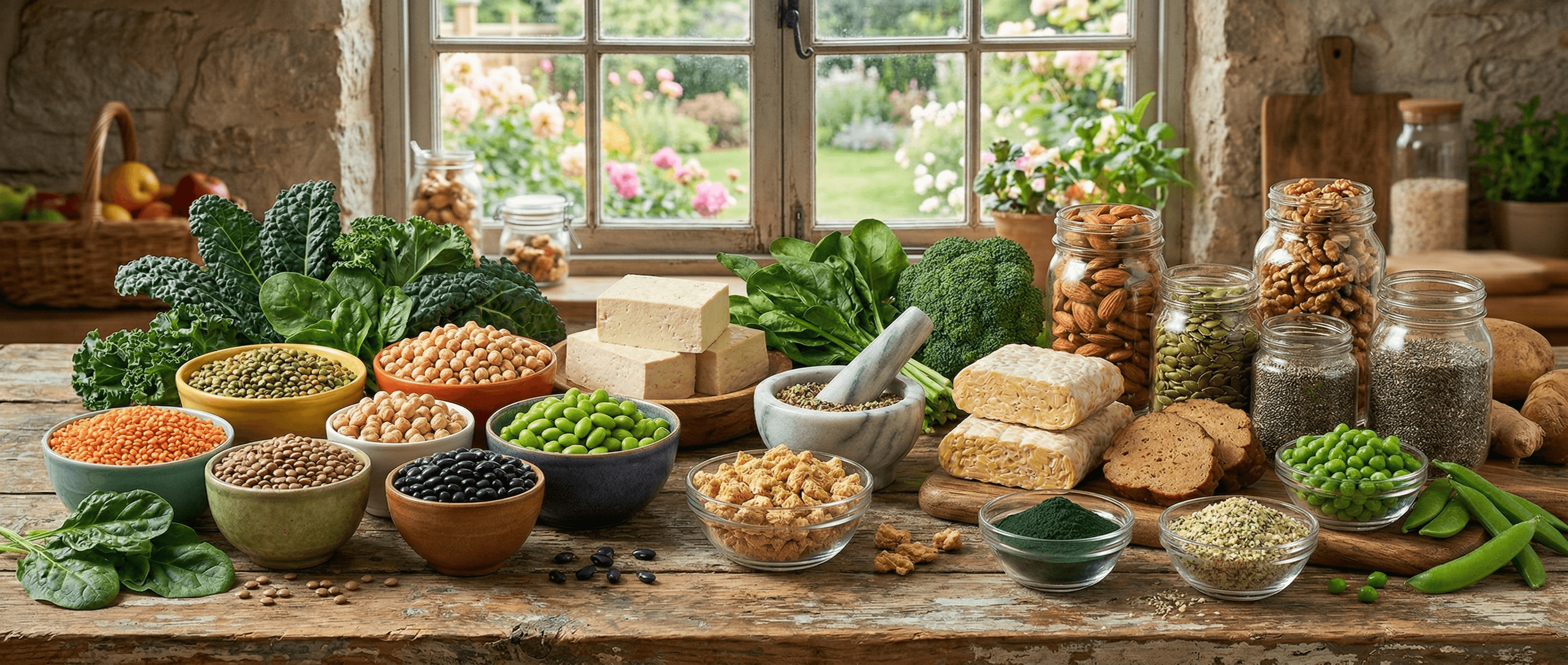
The plant-based protein market is heading to $43B by 2034. Indian lentils, chickpeas, and pulses sit at the center of this shift. Here's what global importers need to know.
The Plant-Based Protein Boom: Why Global Importers Are Turning to Indian Lentils and Pulses
Something significant has been happening in the global food industry over the past few years, and it goes well beyond the "plant-based burger" trend that got all the media attention. While journalists were writing about Beyond Meat and Impossible Foods, a quieter and arguably more consequential shift was underway in the ingredients market one that points directly at a category India has dominated for centuries: lentils, chickpeas, and pulses.
The global plant-based protein market reached $18.7 billion in 2024 and is forecast to grow to $43 billion by 2034 at a CAGR of 8.7%. That number alone is striking. But what matters more for importers is understanding where the demand is actually coming from and which supply chains are positioned to meet it. The answer, increasingly, runs through India.
Why Pulses Are at the Center of This Shift
The plant-based protein boom is not primarily a story about lab-grown meat or pea protein isolates in sports supplements, though both are real markets. At its core, it is a story about flexitarianism - the broad, global consumer shift toward eating less meat without eliminating it entirely. 61% of global consumers now consider plants their preferred protein source, and the food industry is scrambling to reformulate products, restock shelves, and secure supply chains to meet that preference.
Lentils and pulses are the most commercially practical answer to that demand. Unlike soy, which requires significant processing to become a usable protein ingredient, lentils and chickpeas can be sold whole, split, or minimally processed into flour and still deliver the protein content, fiber, and nutritional profile that food manufacturers and health-conscious consumers want. The protein flour segment is emerging as the fastest-growing type in the plant-based protein market, expanding at a CAGR of 15.8% through 2033 - fueled by its cost-effectiveness, minimal processing, and compatibility with traditional food systems.
Chickpea flour is in pasta and baked goods. Red lentil flour is in gluten-free products. Split lentils are in ready-to-eat meals and soups across every major retail market. These aren't emerging trends - they are established, growing demand channels that any serious food importer needs reliable supply for.
India's Position in the Global Pulse Trade
India is the world's largest producer and consumer of pulses, accounting for 26% of global production and 36% of global area under pulse cultivation. The range of what India produces is broader than most importers realize: red lentils (masoor), chickpeas in both kabuli and desi varieties, pigeon peas (toor dal), black gram (urad), green gram (moong), and yellow lentils - each with distinct culinary applications and end markets.
India exported over 2.5 million metric tons of pulses in FY 2024-25, with red lentils, chickpeas, pigeon peas, black gram, and green gram among the top contributors. The leading destinations for Indian pulse exports include Bangladesh, China, UAE, the United States, and Nepal - a spread that reflects both regional proximity and the global reach of Indian diaspora food preferences.
What makes India particularly valuable as a pulse sourcing origin right now is its sheer product breadth. No other single country can supply the full range of pulse varieties that food manufacturers and distributors need across diverse applications. Canada leads in lentils, Australia in chickpeas - but neither can match India's portfolio width, and both face their own supply volatility from weather and trade policy factors.
The Demand Picture by Region
The lentil import market globally is substantial and growing. Global lentil trade reached approximately 5 million metric tons in 2023, nearly 20% higher than the prior year. The MENA region is the anchor - Turkey, Egypt, UAE, and Saudi Arabia are consistently among the world's largest lentil importers, driven by culinary traditions where lentil-based dishes are staple daily food rather than occasional health food. Egyptian households use chickpeas and lentils as primary protein sources, and Middle Eastern food manufacturers increasingly require certified, traceable supply for retail-packaged products.
Europe represents the premium end of the market. The organic sector is gaining traction, particularly in Europe, where demand for organic lentils is increasing and there is a clear niche for new suppliers to enter the market. European food manufacturers are under growing pressure from retailers demanding organic certification, clean-label ingredients, and sustainability traceability. Organic pulses from India - particularly organic red lentils and organic chickpeas - command a meaningful price premium in this channel, and certified supply remains limited relative to demand.
North America is where the growth story is most dramatic. The US vegan population is projected to reach 70 million by 2027, and even among non-vegans, high-protein plant ingredients have gone mainstream in a way that would have been unrecognizable a decade ago. Lentil pasta, chickpea snacks, pulse-based protein bars - these are now shelf staples in mainstream American and Canadian grocery retail, not specialty health food stores. For importers supplying food manufacturers in these markets, demand for bulk lentil imports and chickpea imports is consistent, growing, and not subject to the trendiness risk that affects more processed plant-based products.
The Asia-Pacific region is the fastest-growing market by percentage. Asia Pacific is expected to emerge at the fastest CAGR during the forecast period of 2025 to 2034, due to cultural preference for plant-based diets and an enlarged population. Japan, South Korea, and increasingly China are building out plant-based ingredient supply chains at significant scale, and Indian pulse exporters are well-positioned geographically to serve these markets.
The Supply Dynamics Every Importer Should Understand
The global pulse supply picture in 2025 has some important nuances that affect sourcing strategy.
Canada remains the world's largest lentil exporter and has had strong production years recently - Canada's total lentil production in 2024 reached 2.43 million tonnes, a 35% increase from 2023. For buyers sourcing red lentils specifically, Canadian supply is significant and should be on any procurement team's radar. However, Canada's trade relationship complexity - the ongoing tension with China affecting Canadian pea exports, and the diplomatic history with India affecting direct Canada-India trade - creates routing and pricing unpredictability that buyers should factor in.
Australia is the dominant chickpea exporter, but faces weather-driven yield volatility that has affected supply in recent seasons. Frost damage in 2024-25 left Australian chickpea harvest figures uncertain at the time of writing.
India's advantage in this context is diversification across varieties. A buyer who sources red lentils from Canada, chickpeas from Australia, and pigeon peas and black gram from India has built a more resilient pulse supply chain than one who concentrates entirely in a single origin. India fills the variety gaps that no other origin can cover at comparable scale.
One supply dynamic worth watching: India imported a record 6.5 million tonnes of pulses in 2024-25, up 40% from the previous year, reflecting declining domestic production driven partly by climate impacts on chickpea and lentil growing areas. This signals that India's own production is under pressure from weather variability - a factor that affects export availability of certain varieties, particularly chickpeas and lentils. Smart buyers build this into their forward contracting approach, securing committed supply rather than relying on spot purchasing.
The Certification Requirements That Are Now Non-Negotiable
The plant-based protein import market has matured significantly in terms of what buyers and retailers expect from documentation and certification. This is not just a European phenomenon - it's now standard across most developed market retail channels.
For food manufacturers using Indian pulses in labeled products, country of origin documentation and FSSAI certification from the Indian exporter are the baseline. For products making organic claims, USDA NOP certification for US buyers and EU organic certification for European buyers is required - not optional. For Middle East buyers, Halal certification is a standard requirement across most GCC retail channels.
Traceability is the certification requirement that is accelerating fastest. Retailers in Europe and North America are increasingly requiring farm-to-ship traceability for pulse ingredients in clean-label products - the ability to know which growing region a batch originated from, what pesticide residue testing was done, and what quality parameters were measured at origin. Indian exporters who have invested in this capability are winning contracts that others are losing, regardless of price.
For food manufacturers specifically, FSMA (Food Safety Modernization Act) compliance is relevant in the US context - if you're importing pulses as ingredients for further processing, your supplier's food safety plan needs to align with FSMA Preventive Controls requirements.
The Commercial Opportunity for Importers
The intersection of the plant protein market growth trajectory and India's pulse export capabilities creates a specific commercial opportunity that importers across all regions should be positioning for now rather than later.
The demand side is structural - flexitarianism, protein fortification, clean-label formulation, and ethnic cuisine mainstreaming are not passing trends. The supply side from India offers product breadth, competitive pricing at scale, and improving certification infrastructure. The tariff environment for importing pulses from India has improved for US buyers under the 2026 US-India trade deal, and the India-EU FTA creates a similar improving trajectory for European buyers.
The buyers who will be best positioned in this market in three to five years are those building direct supplier relationships in India now - relationships that give them supply priority, quality consistency, and documentation reliability at the scale their business needs. Waiting until demand peaks to start sourcing conversations is a reliable way to end up at the back of a queue.
Frequently Asked Questions
Which Indian pulses are in highest global demand right now?
How does Indian pulse quality compare to Canadian or Australian origins?
What certifications are required to import Indian pulses into the US, EU, and GCC?
Is the plant-based protein trend creating genuinely new demand for pulses or just shifting existing demand?
What is the minimum order quantity for bulk pulse imports from India?
How does weather affect Indian pulse supply and what should importers do about it?
The Bottom Line
The plant-based protein boom is not a trend that's going to plateau next year. It reflects a structural shift in how consumers across every major market think about protein - and that shift creates durable, growing demand for the lentils, chickpeas, and pulses that India produces at global scale.
For importers, the question isn't whether to build Indian pulse sourcing relationships. It's whether to do it now, while supply relationships are still available to establish at reasonable terms, or later, when demand peaks and everyone is competing for the same contracts.
Interested in building your pulse supply chain from India?
Reach out to Bayharbor Exports to discuss product availability, grades, certifications, and pricing for your market.