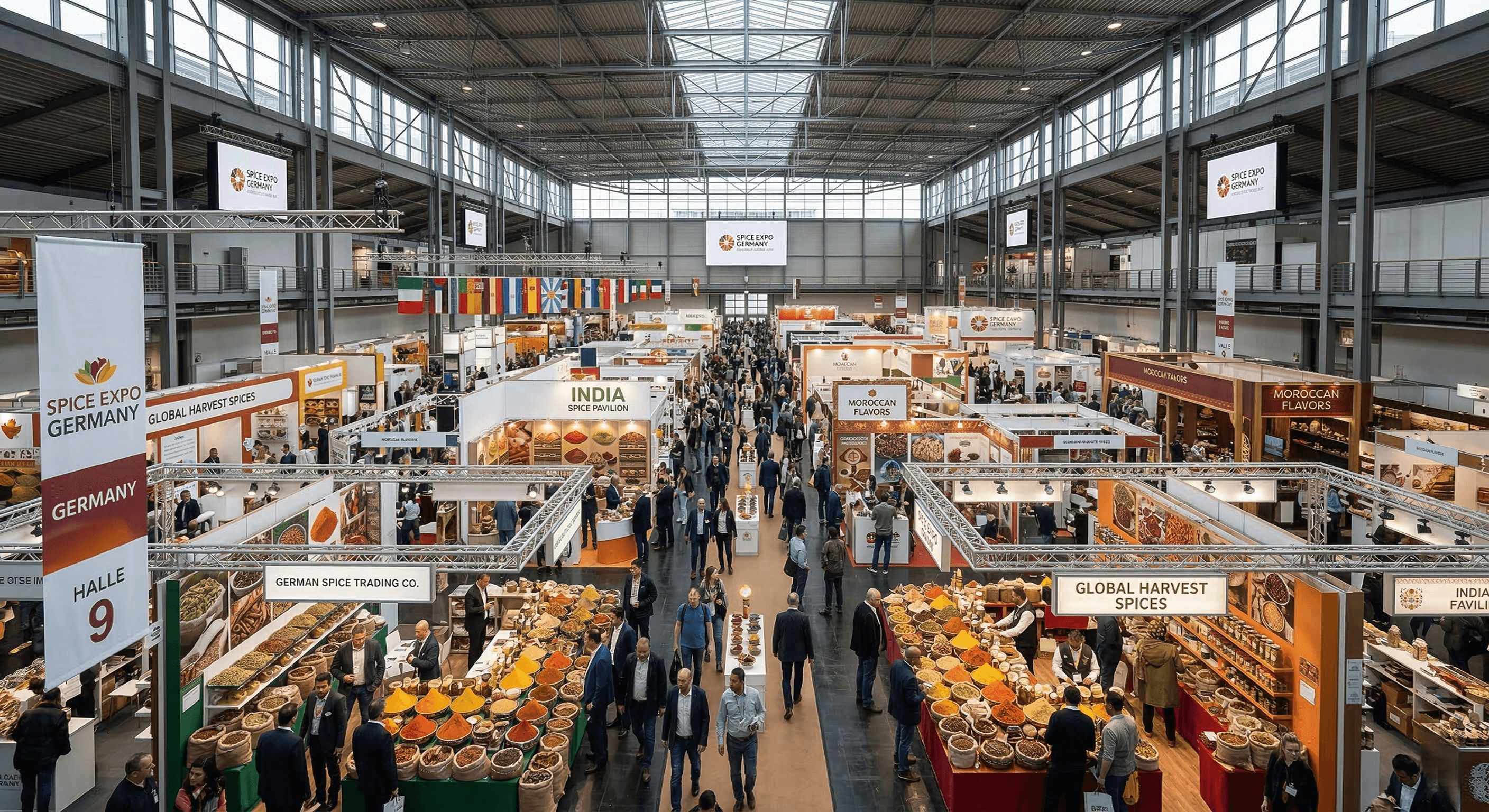
Germany dominates Europe's spice market with $232M in annual imports. Here is what European importers need to know about sourcing Indian spices for this demanding market.
Germany's Spice Market: A $232 Million Opportunity for European Importers
Germany is not just Europe's largest economy. It is Europe's largest spice market, commanding approximately 30% of the total European seasoning and spices landscape and importing $232.26 million worth of spices annually - accounting for 5.7% of the global spice trade. For any importer serious about the European food industry, understanding Germany's spice market isn't optional. It's the entry point to the continent's most demanding and most rewarding sourcing environment.
Germany's position as the largest importer of herbs and spices in Europe has been instrumental in shaping market dynamics continent-wide. The country sits at the intersection of industrial-scale food processing, a health-conscious and increasingly adventurous consumer base, and one of Europe's most robust retail and foodservice networks. The Germany seasoning and spices market is expected to grow at a CAGR of 7.4% from 2025 to 2030 - faster than the broader European average - making it the right time for importers to build or deepen their position in this market.
And India sits at the center of this opportunity. India supplies 42% of Europe's total spice import volume - cumin, turmeric, chili, pepper, cardamom, and coriander - but only the suppliers who understand Germany's specific compliance requirements, buyer expectations, and channel dynamics are capturing the full premium this market offers.
What Germany Is Actually Buying
Germany's spice consumption reflects a consumer base that has moved well beyond basic seasoning. The German market is particularly driven by high demand for specific cooking spices, including pepper, paprika, chilies, and allspice, with around 70% of imports sourced from developing countries.
Turmeric is the standout growth category. The turmeric segment is forecast to register a CAGR of 9.5% during the forecast period, fueled by its functional benefits and rising popularity in health supplements. German consumers are among Europe's most health-conscious, and turmeric's anti-inflammatory and antioxidant credentials have made it a mainstream ingredient across functional foods, wellness beverages, and nutraceuticals - not just a cooking spice. This creates demand across multiple buyer categories simultaneously: food manufacturers, supplement brands, and pharmacy retail chains all compete for the same Indian turmeric supply.
Cumin and coriander are the workhorses of Germany's spice import market. The country's large Turkish, Arab, and South Asian diaspora communities drive consistent demand for these spices in traditional cooking applications, while the growth of Middle Eastern, Indian, and Mexican cuisine across mainstream German retail and quick-service restaurants adds a second demand driver that didn't exist at scale a decade ago.
Cardamom occupies a special position in the German market. Germany is one of the primary European importers of cardamom, driven by both its significant Middle Eastern diaspora community and Germany's own traditional baking culture - cardamom is a key ingredient in Lebkuchen and other regional specialties. For Indian cardamom exporters, Germany represents a premium buyer segment that pays for quality and consistency.
Organic spices are the fastest-growing segment across all categories. In 2020, the organic food market of Germany grew by 20%, and while post-inflation market conditions caused a brief pause, EU imports of organic spices and herbs grew again in 2024 by 14%, showing the positive impact of lower inflation, with lower inflation expected to support demand for organic and higher-value spices and herbs in 2025-2026.
The Compliance Landscape
What Makes Germany's Market Demanding
Germany is rewarding precisely because it is demanding. The compliance requirements that screen out lower-quality suppliers are the same requirements that protect premium pricing for those who meet them. Understanding what German buyers require is non-negotiable for any importer attempting to source Indian spices for the German market.
EU Maximum Residue Limits (MRLs)
Every spice imported into the EU must comply with Regulation (EC) No. 396/2005, which sets EU MRL requirements for spices on pesticide residues. These limits are among the strictest in the world, and they apply to both conventional and organic products. In 2024, 277 issues with spices and herbs were reported in the RASFF (Rapid Alert System for Food and Feed) slightly higher than 2023. The most common issue was exceeding Maximum Residue Limits for pesticides, with the second most common being plant toxins, followed by Salmonella as the predominant microbiological contamination.
For Indian cumin specifically, cumin from India has been subject to stricter conditions since 2023, with an increased testing frequency, and this led to a high number of interceptions, which increased the testing frequency to 30% in January 2025. This is a direct compliance risk for importers sourcing cumin without robust pre-shipment testing.
The practical solution is straightforward: source only from FSSAI-certified exporters who supply certificates of analysis from independent third-party laboratories for every batch, covering the specific MRL parameters that EU border controls test for.
Ethylene Oxide ~ The Ban That Changed Everything
Ethylene oxide has been banned in Europe since 2021. Steam sterilization is now the only accepted method for most buyers. This isn't a pending regulation - it's been in force for four years, and importers who are still sourcing from Indian exporters without steam sterilization capability are running active compliance risk. Any shipment arriving with ethylene oxide traces - however small - faces rejection, destruction, or re-export at the importer's cost. Steam sterilization certification from the exporting facility is a baseline requirement, not a premium feature.
TRACES NT Registration
A 2025 new requirement is TRACES NT registration - all health certificates must be pre-registered on the EU TRACES platform 24 hours before arrival. One missing word equals automatic rejection at Hamburg or Rotterdam. For importers clearing spices through Germany's primary entry ports, this procedural requirement is as consequential as the product testing. Work with Indian exporters and freight forwarders who understand the TRACES NT system and treat pre-registration as a standard part of their export process.
EU Organic Certification
For importers accessing Germany's premium organic retail channel - and given the growth trajectory of that segment, most serious importers should be - EU organic certification from the Indian exporter is mandatory. India's NPOP (National Programme for Organic Production) is mutually recognized by the EU, meaning NPOP-certified Indian exporters can supply to the EU organic market without a separate EU certification process for the exporter. APEDA's National Programme for Organic Production provides the certification framework that is mutually recognized by the European Union, Switzerland, and several other major import markets - removing a key trade barrier. For importers, this means the barrier to accessing organic supply from India is lower than many assume - but verifying that your specific Indian supplier holds current NPOP certification and that it covers the product categories you're sourcing is essential.
How the German Market Is Structured
Hamburg as Gateway
Hamburg is Germany's primary port for spice imports and one of Europe's top three spice import hubs alongside Rotterdam and Antwerp. The most important ports for spices and herbs in Europe are Rotterdam, Hamburg, Antwerp, Felixstowe, Valencia and Marseille - after products arrive at those ports they are transported by truck to other parts of Europe.
Industrial Buyers
Germany's large food processing sector - companies producing ready-to-eat meals, condiments, meat seasonings, bakery products, and snacks - represents the highest-volume demand channel for Indian spices. Powdered spices account for over 60% of total sales in the ready-to-eat meals sector.
Retail and Private Label
German grocery retail is dominated by Aldi, Lidl, Edeka, and Rewe - four chains with enormous purchasing power and strict private label quality requirements.
Specialty and Organic Retail
Germany has a large and sophisticated organic and specialty food retail sector - dm, Rossmann, Denn's Biomarkt, and a wide network of independent organic retailers carry premium spice ranges where margin is substantially higher than conventional retail.
The India-EU FTA ~ What It Means for German Buyers
The India-EU Free Trade Agreement signed in January 2026 is a structural tailwind for every European importer sourcing from India.
Frequently Asked Questions
Why is Germany such an important market for spice importers specifically?
What are the most common reasons Indian spice shipments are rejected at German and EU ports?
What is the TRACES NT system and why does it matter?
How does EU organic certification work for Indian spice suppliers?
What certifications should I require from an Indian spice exporter supplying the German market?
How does the India-EU FTA affect the cost of importing Indian spices into Germany?
The Bottom Line
Germany's spice market is $232 million, growing at 7.4% annually, and structurally dependent on developing country imports for categories that Europe cannot produce domestically.
The compliance bar is high. Ethylene oxide is banned, MRL enforcement is intensifying, TRACES NT registration is now mandatory, and organic certification requirements are tightening in premium retail.
The India-EU FTA is improving the economics further.
Ready to source Indian spices for the European market? Reach out to Bayharbor Exports to discuss product availability, certifications, compliance documentation, and pricing.