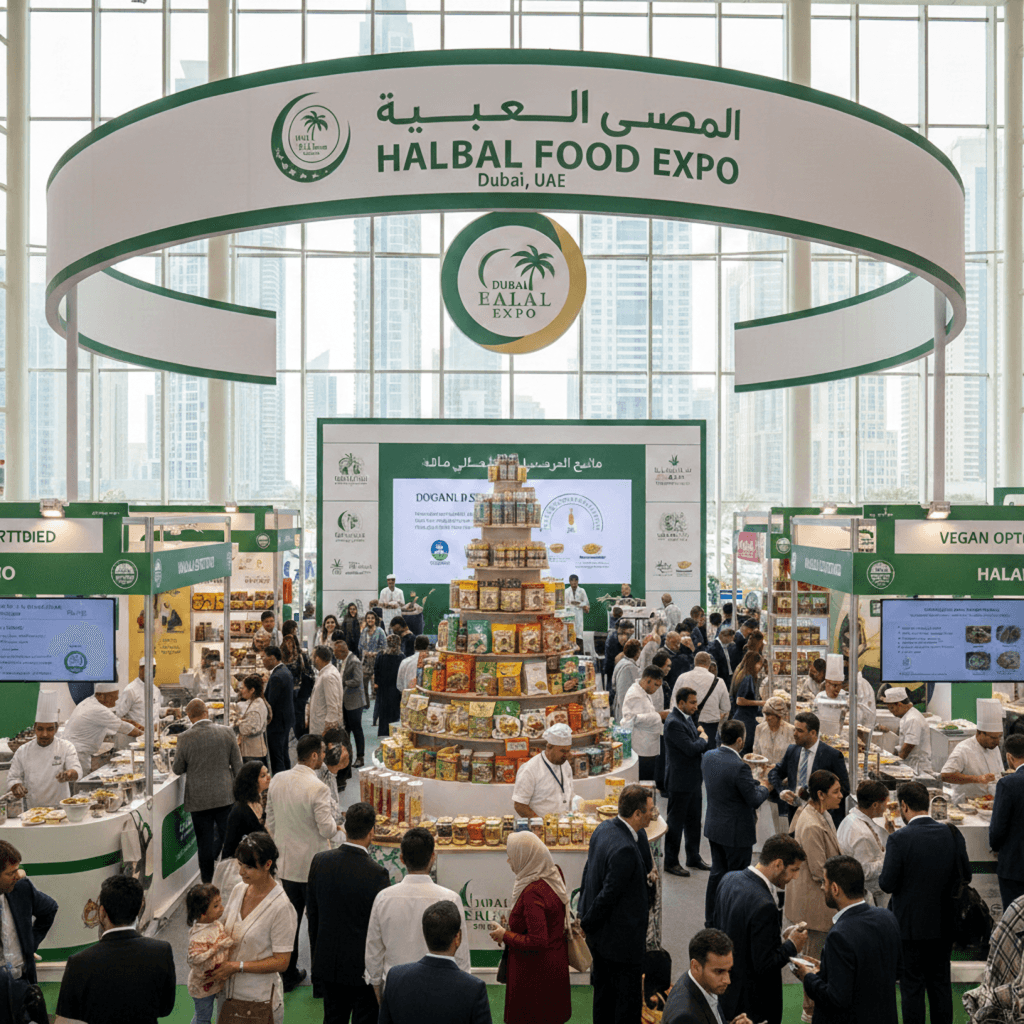
The Trillion-Dollar Opportunity Most Businesses Are Missing
Halal Certification 2026: Your Gateway to the $3-12 Trillion Muslim Consumer Market
The Trillion-Dollar Opportunity Most Businesses Are Missing
While many businesses focus on traditional markets, an extraordinary opportunity is rapidly expanding right before their eyes. The global halal market, valued at approximately $2.99 trillion in 2025, is projected to surge to $6.49 trillion by 2034, representing a compound annual growth rate that outpaces most conventional consumer segments. Some analysts project even more dramatic growth, estimating the market could reach $11.97 trillion by 2035, driven by the world's Muslim population expanding to 2.2 billion by 2030 and 2.8 billion by 2050.This remarkable growth transcends simple demographics. Muslim consumers increasingly demand authenticated halal products across food, pharmaceuticals, cosmetics, and personal care categories. Major markets including Indonesia, the world's largest Muslim-majority nation, are implementing mandatory halal certification requirements beginning October 2026, creating both compliance imperatives and competitive advantages for certified suppliers. Meanwhile, non-Muslim consumers increasingly choose halal products, perceiving them as higher quality, more ethical, and better regulated than conventional alternatives.
For exporters, manufacturers, and retailers seeking growth opportunities in a competitive global marketplace, halal certification represents not just market access but strategic positioning in one of the world's fastest-growing consumer segments. Understanding halal requirements, navigating certification processes, and developing authentic halal product lines can unlock extraordinary business opportunities spanning the Middle East, Southeast Asia, Africa, Europe, and increasingly the Americas.
Understanding the Halal Market Landscape
Market Size and Growth Trajectory
The halal economy encompasses far more than food products. Muslim spending reached $2.8 trillion by 2025 across food, pharmaceuticals, cosmetics, modest fashion, media, recreation, and travel. The food and beverage segment alone, representing the largest component, is projected to grow from $1.46 trillion in 2025 to $2.57 trillion by 2034. Halal pharmaceuticals and cosmetics markets are expanding even faster as Muslim consumers increasingly seek certified options ensuring compliance with Islamic principles.Regional variations reveal concentrated opportunities. The Middle East and North Africa remain the largest halal markets given their predominantly Muslim populations, but Southeast Asia, particularly Indonesia, Malaysia, and Brunei, represents the fastest growth. Indonesia's mandatory halal certification law, fully implemented by October 2026, affects not just domestic products but all imports, creating compliance requirements for any business targeting this 277 million person market.
Beyond Muslim-majority regions, significant opportunities exist in Western markets. The United States halal market alone reached $59.4 billion in 2022 and is projected to hit $88.9 billion by 2026, driven by a Muslim population exceeding 3.5 million plus non-Muslim consumers choosing halal products. European markets including UK, France, Germany, and Netherlands show similar patterns with substantial Muslim populations and growing mainstream halal acceptance.
The Non-Muslim Halal Consumer
One of the market's most interesting dynamics involves non-Muslim consumers increasingly purchasing halal products. Research indicates significant percentages of halal food purchasers are non-Muslim, attracted by perceptions of superior quality, cleanliness, and ethical treatment of animals. Halal slaughter requirements prohibiting stunning before slaughter and mandating humane treatment appeal to consumers concerned about animal welfare, while strict hygiene and processing standards attract quality-conscious buyers.This crossover appeal means halal certification isn't solely about accessing Muslim markets but rather positioning products as premium, ethical, and quality-assured for diverse consumer bases. Retailers report halal products often command price premiums of 10-30% over conventional alternatives, with consumers willing to pay more for perceived benefits.
What Halal Certification Actually Means
Islamic Dietary Laws Foundation
Halal, an Arabic term meaning "permissible" or "lawful," derives from Islamic dietary laws outlined in the Quran and Hadith (teachings of Prophet Muhammad). Foods are categorized as halal (permitted), haram (forbidden), or mashbooh (doubtful). Clear haram prohibitions include pork and pork by-products, alcohol and intoxicants, carnivorous animals with fangs, birds of prey with talons, blood and blood by-products, animals not slaughtered according to Islamic rites, and improperly slaughtered animals.
However, halal encompasses more than prohibited ingredients. The concept extends to ethical sourcing, humane treatment throughout supply chains, cleanliness and hygiene in processing, and absence of cross-contamination from haram substances. A product containing entirely permissible ingredients can still be non-halal if processed using equipment contaminated with pork or alcohol, if animals weren't slaughtered properly, or if the supply chain lacks integrity.
Halal Slaughter Requirements
For meat and poultry products, slaughter (dhabihah) follows specific Islamic requirements. A Muslim must perform the slaughter, invoking God's name (saying "Bismillah Allahu Akbar" - In the name of God, God is Greatest) before the act. The animal must be alive and healthy at slaughter time. A swift, deep incision with a sharp knife severs the carotid artery, jugular vein, and windpipe in one motion, allowing rapid blood drainage. The animal must not witness other animals being slaughtered, and stunning before slaughter remains controversial with some certifiers permitting certain types while others prohibit any stunning. These requirements distinguish halal meat from conventional processing and also differentiate it from kosher slaughter, though similarities exist between the two traditions. The emphasis on animal welfare, rapid death, and complete blood drainage reflects Islamic principles of mercy and cleanliness that resonate with many modern consumers beyond religious obligations.Halal Beyond Food
While food products dominate halal certification, the concept extends to pharmaceuticals, cosmetics, personal care products, and even financial services. Halal pharmaceuticals must avoid alcohol-based solvents, porcine-derived gelatin capsules, and other haram ingredients. Cosmetics and personal care products cannot contain pork-derived ingredients, alcohol above trace amounts, or ingredients from improperly slaughtered animals.
Islamic finance, a related concept, prohibits interest (riba), excessive uncertainty (gharar), and investment in haram industries including alcohol, pork, conventional finance, and gambling. While not "halal certified" in the traditional sense, Islamic finance represents part of the broader halal economy, with global Islamic finance assets exceeding $3 trillion and growing rapidly.
Major Halal Markets and Regional Variations
Middle East and North Africa
The GCC countries (Saudi Arabia, UAE, Kuwait, Qatar, Oman, Bahrain) along with Egypt, Morocco, and other North African nations represent mature halal markets with sophisticated consumers and established regulatory frameworks. Saudi Arabia, home to Islam's holiest sites, maintains particularly strict standards through the Saudi Food and Drug Authority (SFDA), requiring halal certification from recognized international bodies for all meat imports and many processed foods.
The UAE has emerged as a global halal hub with Dubai positioning itself as a center for halal trade, certification services, and industry development. The Emirates Authority for Standardization and Metrology (ESMA) coordinates halal standards, while free zones offer infrastructure and support for halal-certified businesses targeting Middle Eastern and global markets.
Southeast Asia: The Growth Engine
Indonesia, Malaysia, Singapore, Brunei, and Muslim-majority regions of Thailand and the Philippines represent the halal market's growth frontier. Indonesia's mandatory halal certification law, fully implemented by October 17, 2026, requires all products entering Indonesian markets to carry halal certification from recognized bodies. This affects not just food but pharmaceuticals, cosmetics, and other consumer products, creating compliance imperatives for any business targeting this massive market.
Malaysia pioneered comprehensive halal standards and certification through JAKIM (Department of Islamic Development Malaysia), whose certification is recognized globally as gold standard. Malaysian halal certification covers ingredients, processing, logistics, and even warehouse storage, ensuring complete supply chain integrity. The stringency has made Malaysian certification highly trusted, with many international companies seeking JAKIM approval even when targeting markets beyond Malaysia.
South Asia: Diverse Requirements
India, Pakistan, and Bangladesh together house over 600 million Muslims, creating enormous domestic halal markets. However, regulatory approaches vary significantly. India, with the world's second-largest Muslim population exceeding 200 million, has multiple halal certification bodies operating under Islamic organizations rather than government oversight. The Jamiat Ulama-i-Hind Halal Trust and Halal India Private Limited are among recognized certifiers.
Pakistan's halal certification operates through the Pakistan National Accreditation Council coordinating with Islamic advisory boards, while Bangladesh's halal standards are managed through the Bangladesh Standards and Testing Institution working with Islamic scholars. The diversity of approaches means businesses targeting South Asian markets may need multiple certifications or work with internationally recognized certifiers accepted across the region.
Western Markets: Growing Sophistication
Muslim populations in Western Europe, North America, and Australia create substantial halal markets within predominantly non-Muslim countries. The United Kingdom, with approximately 3.9 million Muslims, has developed sophisticated halal infrastructure including numerous certification bodies, halal-specific retailers, and mainstream supermarkets offering extensive halal ranges. France, with Europe's largest Muslim population exceeding 5.7 million, shows similar development.
The United States presents unique opportunities and challenges. With over 3.5 million Muslims and growing non-Muslim halal consumption, the market reached $59.4 billion in 2022. However, halal certification in the US operates through private certifiers rather than government oversight, with bodies including the Islamic Food and Nutrition Council of America (IFANCA), Halal Advocates of America, and Islamic Services of America competing for market share. This fragmentation means businesses may need multiple US certifications for comprehensive market coverage.
Halal Certification Process and Requirements
Choosing the Right Certification Body
Selecting appropriate halal certifiers is critical as recognition varies by target market. Major internationally recognized certifiers include JAKIM (Malaysia), widely considered gold standard, Majelis Ulama Indonesia (MUI) for Indonesia access, GCC-Accredited Bodies including Emirates Authority for Standardization and Metrology (ESMA), IFANCA (USA) with global recognition, and Halal Food Council of Europe covering European markets.
When selecting certifiers, consider target market recognition, ensuring your chosen body is accepted where you intend to sell, cost and timeline for certification process, ongoing compliance requirements and annual fees, technical expertise and guidance provided, and reputation within Islamic communities and among retailers. Some certification bodies maintain bilateral recognition agreements, meaning certification from one body is accepted in markets nominally requiring different certifiers. Understanding these relationships can reduce certification costs and complexity when targeting multiple markets.
Documentation and Compliance Requirements
The halal certification process typically begins with comprehensive documentation submission. Required materials include complete ingredient specifications with sources, processing facility layouts and equipment lists, standard operating procedures for production, cleaning and sanitation protocols, supplier declarations and certifications, and quality control and assurance systems documentation.
For meat and poultry products, additional requirements include slaughter facility certifications, slaughterman qualifications and training records, animal sourcing and welfare documentation, and segregation procedures preventing cross-contamination. The depth of documentation reflects halal certification's comprehensive approach to supply chain integrity rather than just final product testing.
Facility Inspection and Audit
Following documentation review, certification bodies conduct facility inspections examining physical premises, equipment, storage areas, and operational procedures. Auditors verify ingredient sourcing and authenticity, processing methods and equipment cleanliness, segregation from non-halal products preventing cross-contamination, staff training and awareness of halal requirements, and traceability systems tracking products through supply chains.
For slaughter facilities, auditors observe actual slaughter procedures, verify slaughterman qualifications and Islamic knowledge, inspect stunning equipment if used and its compliance with certifier standards, examine blood drainage procedures, and review animal welfare protocols. The comprehensive nature of audits means businesses should prepare thoroughly before scheduling inspections to avoid delays and additional costs.
Ongoing Compliance and Surveillance
Halal certification isn't one-time approval but requires ongoing compliance with periodic surveillance audits (typically annual), immediate notification of any ingredient or process changes, maintenance of detailed production and traceability records, and continued adherence to all certification conditions. Failure to maintain compliance can result in certification suspension or revocation, potentially devastating for businesses having invested in halal market positioning.Many certifiers offer different certification levels ranging from basic ingredient approval to comprehensive facility and supply chain certification. Higher levels command greater market trust but involve more stringent requirements and costs. Businesses should assess their target markets and customer expectations when determining appropriate certification levels.
Ready to access the world's fastest-growing consumer market? Contact Bayharbor Exports today to discuss how our halal-certified products can help you tap into the $3-12 trillion Muslim consumer market across Middle East, Southeast Asia, South Asia, and beyond. Bayharbor Exports - Your Trusted Partner for Halal-Certified Products Worldwide